


Software refers to a collection of instructions, commands, programs, and data that tell a computer what to do or how to perform a specific task. It is an important part of every computer. Without software, a computer is useless. Different software performs different tasks and produces different results. Software is also known as an application. In this article, I will be showing you What you need to know about Software Development Life Cycle.
Software development is the tedious process of designing, creating, coding, testing, and maintaining software. It involves critical thinking, turning an idea into a functional computer program. It requires paying attention to details and collaboration among the members of a development team.
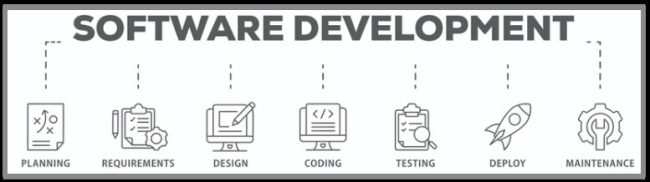
Software Development Life Cycle (SDLC) is the systematic process involved in Software Development. It refers to the various stages of planning, designing, building, testing, and maintaining computer software. The SDLC provides a structured approach that guides Software development teams and ensures that each software being built is of the highest quality, produced right on time, and maintains a reasonable budget.
The goal of The Software development life cycle is to produce efficient software through advance planning and satisfy the needs of a client and potential users. The SDLC is focused on creating a detailed plan that should be followed during any software development. In this guide I will be discussing about Software Development Life Cycle. You may want to read about How to Write a Good Bug Report (A Complete Guide) and What is Software Testing? and What is a User Stories and Why do you need it? You can read this if you want to know about Best Practices for Application Deployment
Software Development Life Cycle Models
The Software Development Life Cycle Models refers to different ways the development process can be organized to avoid potential risks and solve the needed problems. Each development team chooses which SDLC Model to use after considering factors like budget, flexibility required in change implementation, project complexity, and timeline.
There are basically 5 SDLC Models.
1. Waterfall Model: This is an approach where each phase of development is completed before the next one. It is most effective for software with well-defined and understood requirements.
2. Agile Model: In this approach, development is carried out bit by bit or in short cycles with frequent collaboration and feedback.
3. Iterative Model: This model involves repeating cycles of development and testing, then refining the software regularly.
4. Spiral Model: This model combines iterative development with the Waterfall Model. It is focused on risk assessment and reduction.
5. Verification and Validation Model(V-Model): This model follows the same as the Waterfall Model but emphasizes validation and verification at each stage, this involves running a test alongside each stage of development.
SDLC Phases
The various stages in the Software Development Life Cycle are divided into six (6).

1. Requirement and Planning
This is the first stage in the SDLC and can also be called requirement stage. It includes capacity planning, scheduling, cost estimation, and resource allocation. At this stage, the features, expectations, and qualities of software are defined and clearly mapped out. This stage also decides what is not needed in software.
To achieve this, the development team communicates clearly with the clients to discern what is really needed from software and the problem it is meant to solve. With this information, they create a Software Requirement Specification File. Simply put, this stage involves understanding the needs of a user, clearly defining the functionalities of the software, and creating a detailed plan.
2. System Analysis and Design
In the design stage, the development team analyzes the requirements and identifies the best way to go about creating the software. At this stage, a flowchart is also drafted to show how each section of the software connects to another. Some developers, too, use pseudocode to define the various logics that may be needed during the development process. This makes it easier to decide which programming language to use.
During this stage, system designs are developed based on the defined requirements. This may include high-level architecture, and UI/UX (User Interface and User Experience) Design and it is focused on creating a blueprint for the software. Once the analysis and design stage is successfully completed, the work becomes a whole lot easier, and transition is made to the Coding stage.
3. Implementation
This is where the main work is done. This stage can take a long time. In this phase, software developers write the actual code of the software being produced based on what is being designed. They use programming languages and frameworks to develop the needed software. A frontend developer develops the client-side of the software while a backend developer handles the server-side.
4. Software Testing
Testing is an essential step that comes before deploying a developed software. It involves validating the software to make sure it meets the needed requirements and functions as predefined.
The software is being assessed by conducting different forms of testing(Unit testing, system testing, security testing etc.). If any error is identified, the development team will be notified, they will debug the software and release a bug-free version of the software. After the testing is conducted and the software is now in good shape, it is ready for deployment.
5. Software Deployment
Software deployment refers to the process of pushing software to the web, making it accessible for users from different locations and different devices. Once a software passes, the testing and its quality are assured, it is deployed to a production environment. Next, the software is installed on servers and made available for users.
6. Software Maintenance
This is the final stage in the life of every software, and it is an ongoing process. After software is deployed, it is being maintained regularly. Maintenance involves bug fixes, regular updates, implementing new features and making changes based on feedback from end users. Maintenance is essential to ensure the functionality and relevance of a software.
Benefits of Software Development Life Cycle
There are tons of benefits associated with the SDLC. This includes:
1. Clear Requirements: Through the analysis and requirements understanding stage, SDLC guarantees a simplified explanation and clear breakdown of the features and goals of a software. This reduces misunderstanding and minimizes chances of building a software that’ll leave a client or end user unsatisfied.
2. Quality Assurance: Since a specific stage in the SDLC focuses on testing a developed software, it results in building a high-quality software. Various types of tests include unit testing, regression testing, confirmation retesting, and so on. These tests ensure that each software deployed and released is of top-notch quality.
3. Traceability: When the SDLC is followed it makes it easier to trace changes, decisions, and requirements throughout the development cycle. This is necessary for Auditing and compliance with regulations.
4. Documentation: SDLC facilitates documentation of requirements, design decisions and different development processes. This documentation is important during the development process and after development for maintenance, enhancement and knowledge sharing.
5. Effective communication: SDLC promotes collaboration and clear communication among team members, clients and users. This ensures that everyone is carried along during the development process and makes sure everything is in line with project goals which leads to making better project decisions.
The Software Development Life Cycle (SDLC) is very essential to the development of a qualitative software. On the other hand, The specific benefits derived from sequentially going through the SDLC depends on which model a development team chooses.
The Software Development Cycle is a systematic process used in software development, involves several phases, and each contributes to the development of efficient software. Following the SDLC, any development team achieves a common goal which is, to create software that meets users’ needs, on time, within budget, and with maximum quality.


I just like the helpful info you provide to your articles.
I’ll bookmark your weblog and check once more right here regularly.
I am fairly sure I’ll be informed many new stuff right right
here! Good luck for the next!
Sorry this response is coming late it was due to a purse on the blog but we are back now. I appreciate you taking time to read from this blog. expect more articles on this platform. Regards. Please follow us on Linkedin