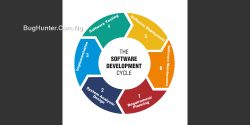

Software testing is a method of examining the behavior and features of the software to determine whether it matches the expected requirements. This involves the execution of software components using manual and automated tools to detect malfunctions and bugs.
Software testing also determines whether the software meets the requirements indicated by its design and development plan. To successfully pass a test, the software must suit users’ needs efficiently, without exception.
While software testing involves identifying faults and bugs in a program, it also involves identifying areas a software needs improvement in functionality and accuracy. You may also want to read Best Practices for Application Deployment and What is a User Stories and Why do you need it?.
Software testing typically involves the following activities:
1. Test Planning
Defining test objectives and strategies, then creating a detailed plan outlining activities for the test.
2. Test Design
Develop test cases, scenarios, and test data based on requirements, functional specifications, and design documents.
3. Test Execution
Running the software test, recording the output, and comparing the test results with the required results.
4. Defect Tracking
Identifying and documenting software defects or issues and managing their lifecycle while the problems are resolved.
5. Test Reporting
Summarizing the test results, providing metrics and insights about the quality of the software, and making recommendations for improvement.
6. Test Automation
Automating repetitive test cases or scenarios to increase efficiency and speed up the testing process.
Software testing is also generally divided into two vital steps:
1. Verification
This test is conducted alongside software development to examine whether the correct product or software is being developed. This form of review is also called “Static testing.”
2. Validation
This test is conducted after software development to ensure developers build the correct product. It is also called “Dynamic testing.”
Types of software testing
There are various ways to test software to guarantee stable performance upon final release. This section explains each type and why it may be crucial for software developers.
1. Unit testing
This is a form of testing on individual units of software. This is mostly done by developers when they examine the functions, methods, models, or classes in a program to ensure that they work accurately.
Unit testing is essential because it makes identifying and erasing bugs on time easier. It also speeds up the development and launch process while improving software quality.
2. Integration testing
This is conducted to ensure a smooth interaction between the units of a program. It is done to fix any issues that may arise when different components are merged. This can be in different stages, like system-to-system and module-to-module, to ensure they interact as expected. This type of testing should be done before the functional testing.
3. System testing
System testing is a general test on the whole system to ensure and validate its compliance with all requirements (functional and non-functional). It involves testing the system’s behavior in different areas and verifying its performance, security, and other system-based features.
4. Functional testing
This type of software testing verifies that the software functions accurately meet the requirements and performs the intended tasks. It ensures that all features of software work and deliver as expected.
5. Performance testing
This test evaluates the system’s performance under definite conditions to weigh its responsiveness, stability, and scalability. Performance testing includes other sub-testing types like endurance testing, stress testing, and load testing.
6. Security testing
Security testing examines a software’s safety and ability to identify and withstand attacks. This involves activities like risk assessment, vulnerability scanning, and penetration testing to ensure that a program is guarded against potential threats.
7. Regression testing
Also known as “Revert testing.” It involves rechecking previously tested features, functionalities, or areas of the software to ensure that changes and fixes to the software have not introduced new bugs and defects to the software. Regression testing helps maintain software stability and reliability. It also reduces stress for a developer.
8. Acceptance testing
This test is focused on determining whether the software meets the needs and requirements of a user. This involves customer representatives or end-users testing software to ensure that it fulfills their needs and will be accepted by other users. Some refer to it as a “User Acceptance Test (UAT).”
9. Exploratory testing
This is an informal type of testing. It occurs when testers navigate through the software, explore its behavior and create test cases. Exploratory testing is beneficial as it helps discover unscripted tests and encourages critical thinking.
10. Usability testing
This focuses on the user-friendliness (User Interface and User Experience) of software. Usability testing ensures that users can easily interact with software, understand its features and take full advantage of the program.
11. Beta testing
In this form of testing, a Beta version of the software is released to a limited number of end users. They give reviews and feedback, which developers work on to improve the software.
12. Alpha testing
This is a form of validation testing. It is carried out to finalize that the right software is being developed before being released to customers.
Frequently Asked Questions
Q #1) What is meant by software testing?
Answer: Software testing is a method of examining the behavior and features of the software to determine whether it matches the expected result and requirements.
Q #2) What is software testing and explain its type?
Answer: Software testing involves identifying faults and bugs in a program, it also involves identifying areas a software needs improvement in functionality and accuracy. Software testing can be functional or non-functional testing.
Q #3) How many types of software testing are there?
Answer: We have many types of software testing which can be unit testing, integration testing, system testing, functional testing, security testing, exploratory testing, alpha testing, beta testing, acceptance testing.
Q #4) What is the main purpose of testing?
Answer: Software testing also determines whether the software meets the requirements indicated by its design and development plan. To successfully pass a test, the software must suit users’ needs efficiently, without exception.
Conclusion
There are many known and unknown types of software testing. Each one is employed based on the requirements of the program being developed. Moreover, many testing types are used on a single project to ensure maximum quality is attained and delivered.
Software testing is an important aspect of development as it improves software quality, reduces maintenance costs, and improves customer satisfaction.
I hope you found this blog post on What is Software Testing? Interesting and helpful. In case you have any questions do not hesitate to ask in the comment section